
Tick Biology
Ticks are small external parasites that attach to the skin of a host to feed on blood that allows them to grow and mature. Without a host, like animals and people, they are unable to survive and reproduce. Ticks are a type of arachnid, so they are more closely related to mites and spiders than they are to insects (like mosquitoes)!
Ticks have four life stages that include an egg, a six-legged larva, an eight-legged nymph, and an adult. Ticks require a blood meal after each life stage! Ixodes scapularis (blacklegged/deer) ticks are three-host ticks because they have a different preferred host for each life stage. For example, the larva and nymph typically prefer small rodents and mammals while the adults seek out larger mammals like white-tailed deer. It takes approximately two years for the tick to hatch from an egg and grow into an adult.
Ticks are found in common natural areas, including leaf litter, brushy wooded areas, and tall grasses. They usually prefer moist, shaded areas.

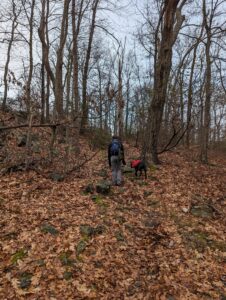


Pictured: Multiple examples of tick habitats, including brushy paths, leaf litter, and tall grasses.
Ticks are active year-round! The immature stage, called nymphs, are most active in the spring while adults are most active in the fall, but they can be found in the summer and winter with the right weather conditions.
Ticks search for a host using a behavior called questing. They climb up taller vegetation, like brush and tall grasses, and wave their forelegs. They can detect humidity, moisture, carbon dioxide, and pheromones so that when a host brushes by, they are ready to climb aboard.
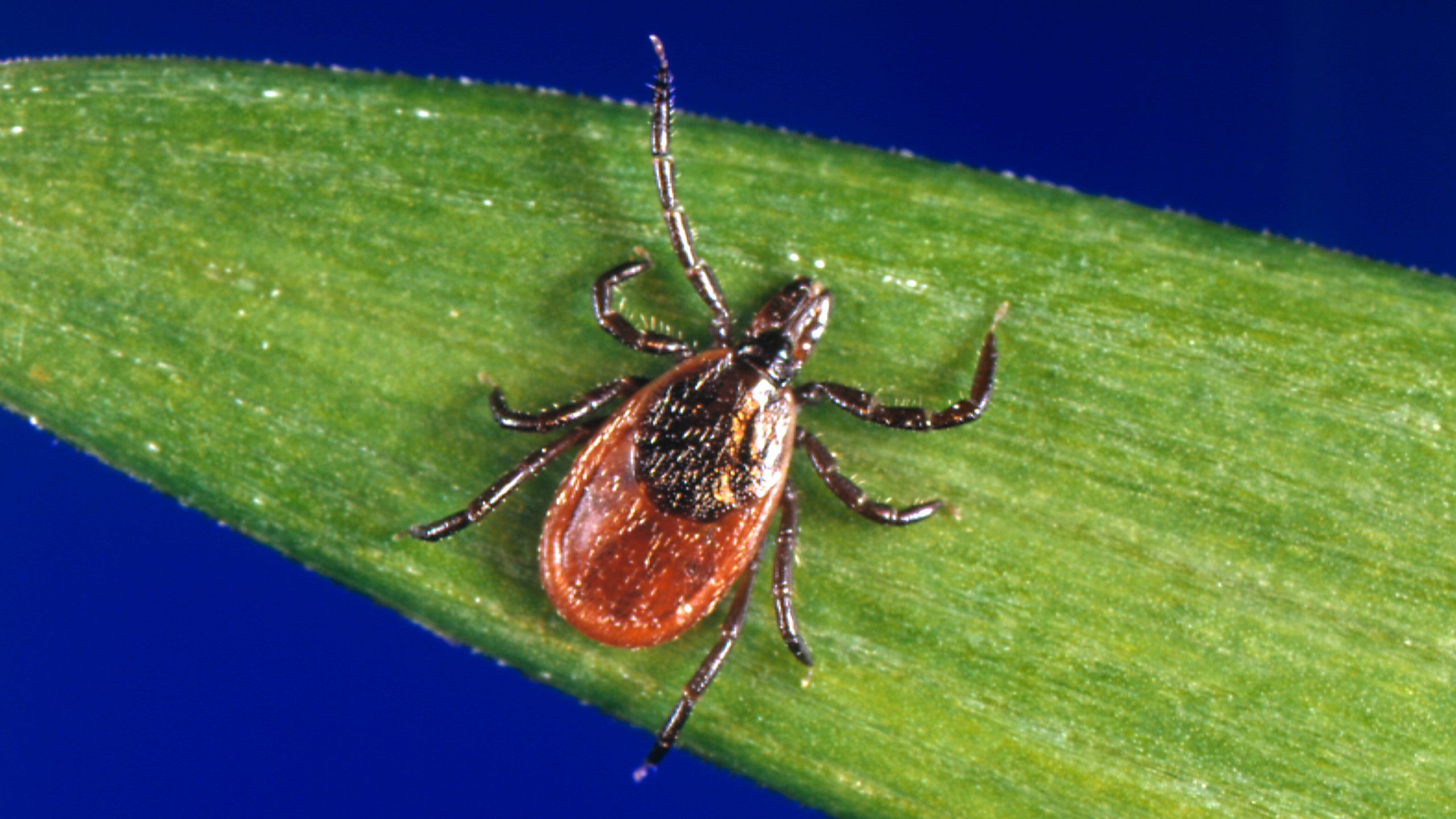
Pictured: An example of an adult tick “questing”.
Once attached to a host, ticks can blood feed for anywhere from a couple of hours to a few days. The mouthpart of the tick has backward-facing barbs that make it difficult to remove. The saliva of ticks acts like cement to glue the tick into place. These two things work together to keep a tick in place during the feeding process.
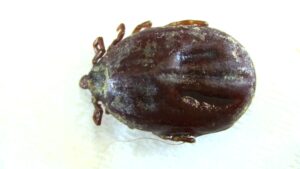 Pictured: An adult female tick with an engorged abdomen. Adult female ticks will feed until they become engorged (filled with blood). Their abdomen expands and stretches to accommodate this.
Every time a tick takes a blood meal, they are exposed to pathogens, which includes viruses, bacteria, and protozoa that can cause illness in people. Those pathogens travel into the midgut of the tick with the blood. If those pathogens can get to the salivary glands of the tick, the tick can become infectious, which allows the tick to pass those pathogens to another host when it blood feeds again.
The most common tick species in Warren County include:
- Ixodes scapularis (blacklegged/deer)
- Dermacentor variabilis (American dog)
- Amblyomma americanum (lone star)
Ixodes scapularis (blacklegged/deer) ticks are the highest public health priority in Warren County because they can carry and transmit many pathogens. The nymphs are incredibly small, similar in size to a poppyseed!
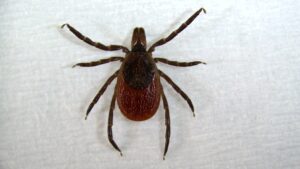 Pictured: Adult female Ixodes scapularis (blacklegged/deer) tick.
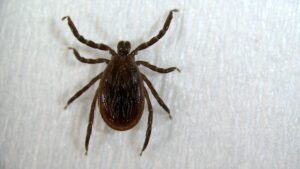 Pictured: Adult male Ixodes scapularis (blacklegged/deer) tick.
Dermacentor variabilis (American dog) ticks are very common in our region. They are much larger than the blacklegged/deer tick and are commonly found on pets.
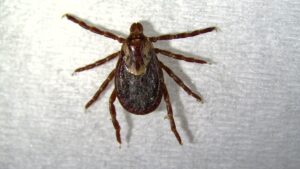 Pictured: Adult female Dermacentor variabilis(American dog) tick.
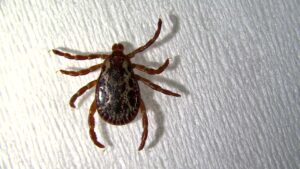 Pictured: Adult male Dermacentor variabilis(American dog) tick.
Amblyomma americanum (lone star) tick are much more common in the southern and coastal regions of the state but can be found on occasion in Warren County. For more information on the lone star tick, please visit CDC’s website