
Tick FAQ’s
How do ticks find a host?
Ticks climb on vegetation and wave their forelegs in the air to receive sensory information, like carbon dioxide, heat, and pheromones, to detect a host in a process called questing. Ticks cannot jump- they act like hitchhikers and crawl onto a host that brushes past them.
Where do ticks live?
Ticks prefer moist, shaded areas of leaf litter, brushy wooded areas, and tall grasses. They can also be found near stone piles and wood piles where rodents are frequently found.
Homeowners can create tick-safe spaces in their yards using the following landscape management techniques:
- Mow grass regularly
- Remove leaf litter from the yard
- Use wood chips on the edge of the property and around playsets
When are ticks active?
Ticks are active year-round! The immature stage, nymphs, are most active in the spring (typically May through July) and the adults are most active in the fall (typically October through December). Ticks are active in temperatures above 40 degrees Fahrenheit and prefer humid conditions.
Do all ticks carry disease?
No! Ticks acquire pathogens that can cause disease when they blood feed. Every time they choose a host and blood feed, there is the potential for them to pick up whatever pathogens are circulating in the blood of that host, so it is entirely possible for some ticks to be carrying zero pathogens or multiple pathogens depending on what they were previously exposed to.
What should I do if I find a tick attached to me or my child?
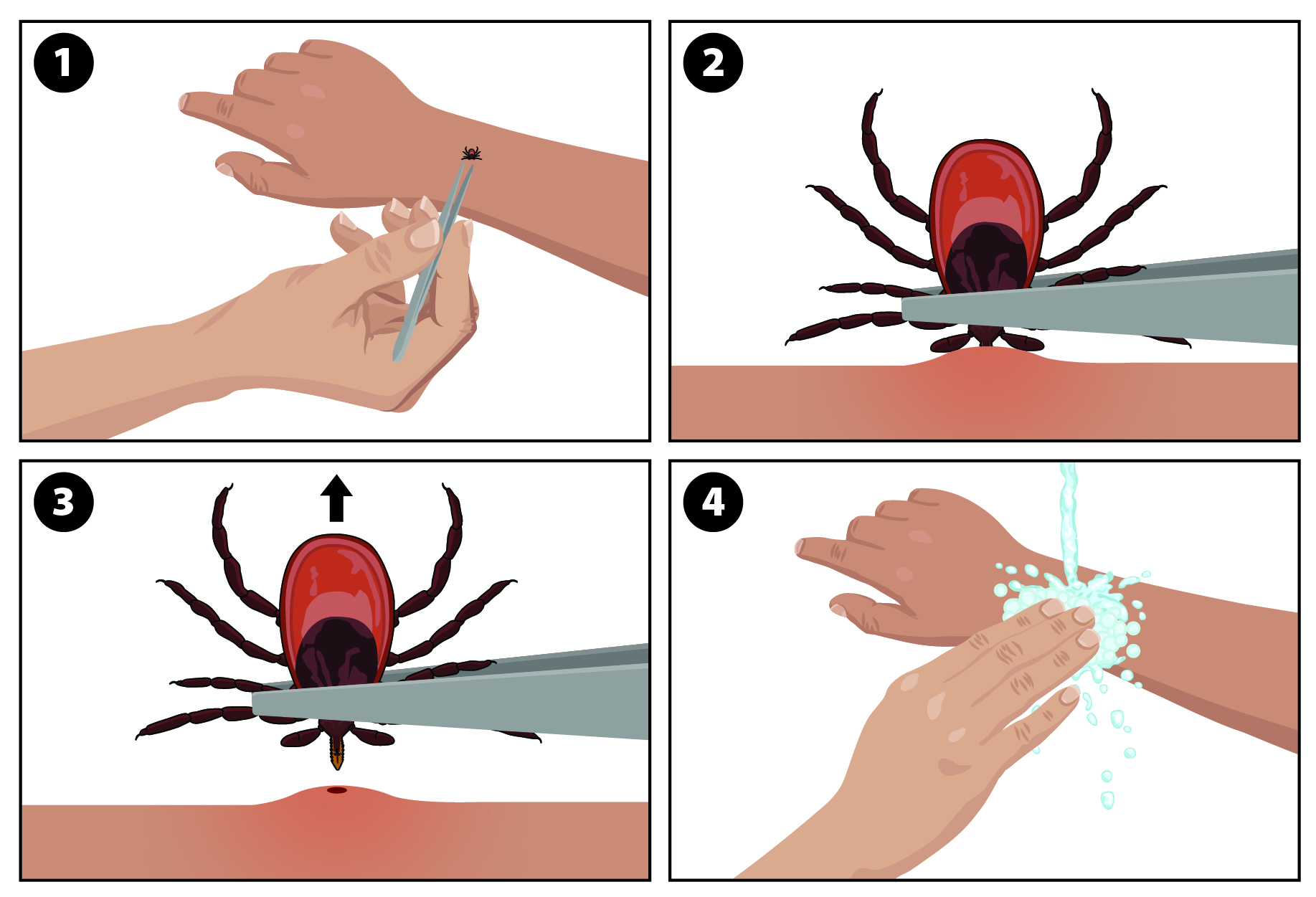
The sooner a tick is removed, the less likely you are to be infected. Use tweezers to remove a tick by grabbing the head of the tick as close to the skin as possible and pulling it straight out. Gently wash the area with warm water and soap. We recommend noting the attached tick on your calendar in the event you develop symptoms of tick-borne disease in future weeks. Attached ticks can be stored in rubbing alcohol, a sealed plastic bag, or wrapped in tape if it needs to be referenced later. Never use petroleum jelly, nail polish remover, or fire to remove a tick.
Should I get a tick tested?
Getting a tick tested for the presence of pathogens that may cause disease can clarify what you may have been exposed to. However, getting a tick tested is not recommended because a tick positive for a disease-causing pathogen is not always infectious, which means it is not always capable nor going to transmit that pathogen. We recommend noting the day you removed an attached tick on your calendar and saving the specimen in a sealed plastic bag or wrapped in tape should you develop symptoms later.
More information on what to do after a tick bite can be found here.
How can I protect myself from ticks?
There are lots of things we can do to prevent ticks from attaching to us! They include:
- Avoiding brush and vegetation by walking in the center of trails
- Tucking our pants into our socks and shirts into our pants to reduce access to the skin
- Performing tick checks after spending time outdoors
- Showering after spending time outdoors
- Pre-treating clothes with permethrin
- Applying and EPA-registered repellent
More information on what you can do to prevent a tick bite can be found here.
How can I protect my pets from ticks?
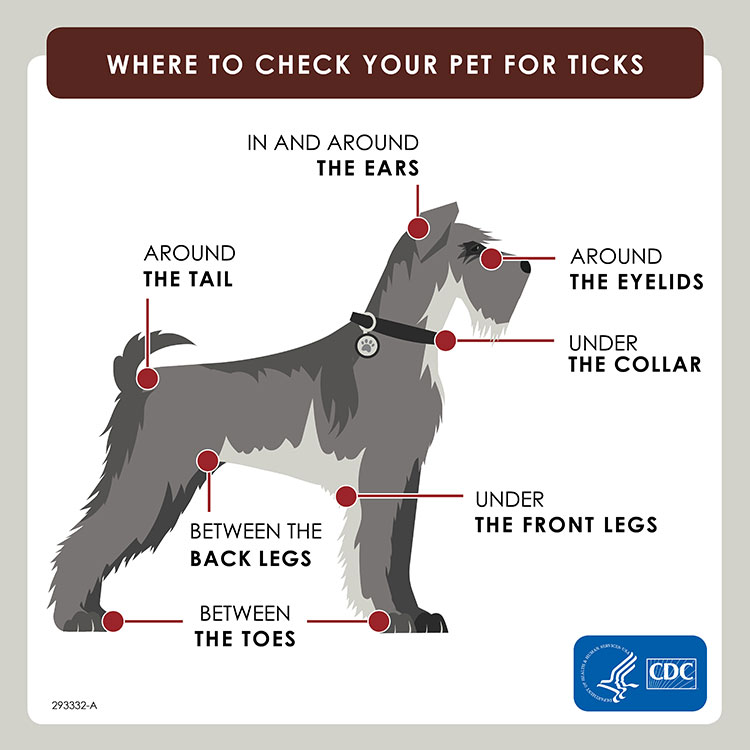
Pets, like people, are at risk of exposure to tick-borne disease. Performing regular tick checks on your dog and removing ticks as soon as you find them can help protect them! Talk to your veterinarian to find a tick prevention product that works for you and your pet. Additionally, reduce suitable tick habitat around your yard and home by maintaining a clean yard, mowing regularly, and removing leaf litter.
What repellent works the best?
Choose the repellent that’s right for you based on the pest you are trying to avoid, your active ingredient preference, and for how long you need to be protected. Products that use oil of lemon eucalyptus should NOT be used on children under the age of 3. Always follow the label instructions when using repellents.
For more information, please visit the following:
Repellents: Protection Against Mosquitoes, Ticks, and other Arthropods.